Memory Bandwidth May Be the Most Overlooked AI Performance Metric

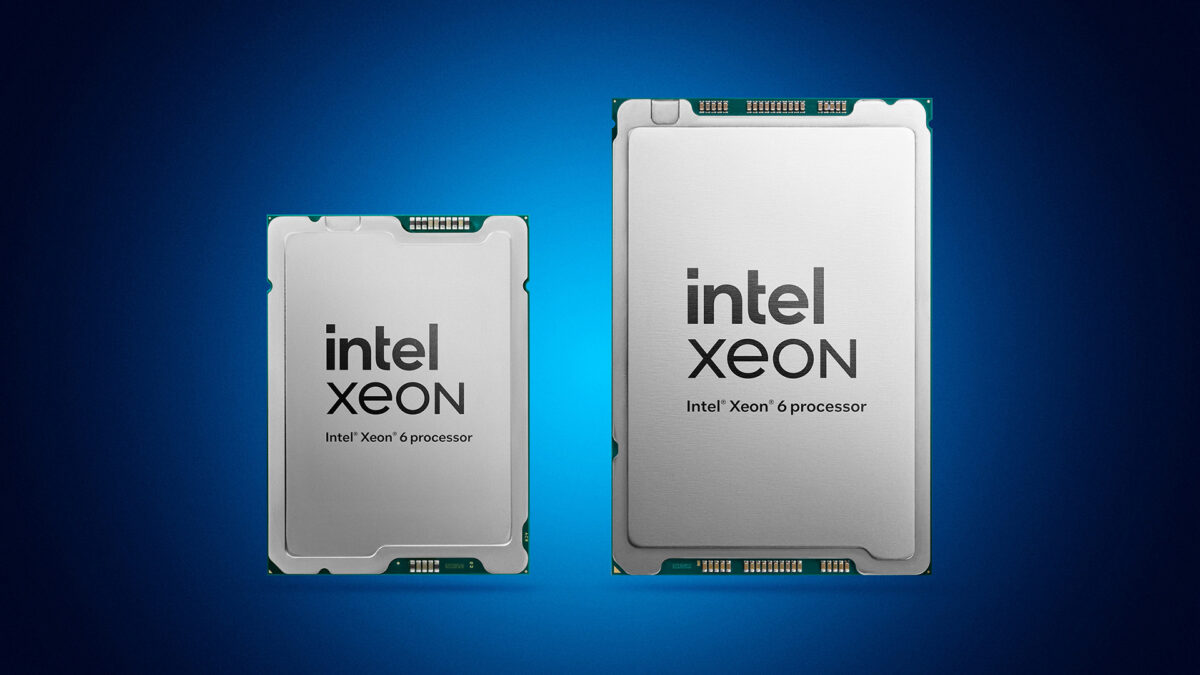
Intel Xeon 6 processors deliver exceptional performance for the widest range of workloads and are engineered for efficiency and low total cost of ownership. On Feb. 24, 2025, Intel launched the Intel Xeon 6700P and 6500P series P-core processors with more cores, double the memory bandwidth and AI acceleration in every core. (Credit: Intel Corporation)
Intel Xeon first to market with 8000 MT/s RDIMM support underscores why data movement is becoming a competitive differentiator.
By Srini Krishna — Fellow, Intel Data Center Group
Opinion: AI performance depends on more than accelerators
In the AI era, it is easy to focus on the most visible parts of the system: the accelerators, the scale of the cluster or the size of the model. But as AI systems grow more complex, one of the most important questions for data center leaders is also one of the most practical: can the platform move data fast enough to keep the entire system productive?
Memory bandwidth is becoming a strategic design point
Modern AI host CPUs are being asked to support larger models, denser GPU configurations and increasingly data-intensive pipelines. In that environment, memory performance is not a secondary specification. It can determine whether CPUs, accelerators and storage operate as a coordinated system — or spend valuable cycles waiting for data.
That is why Intel continues to advance memory performance on the Intel Xeon 6 platform. Intel Xeon 6700P is planned to support 1DPC 8000 MT/s RDIMM functionality on select SKUs, delivering a 25% increase in memory speed over current 6400 MT/s RDIMMs and 6% lower memory latency. For customers designing AI, analytics and other data-centric infrastructure, those gains matter because they help move data more efficiently across the system.
With this enhancement, Intel Xeon 6+ and Intel Xeon 6 are positioned to bring 8000 MT/s RDIMM support to market, a first among mainstream server platforms (via UPLR release and BIOS update on Intel Xeon 6). This enables a new level of RDIMM memory bandwidth for demanding workloads. Production availability is targeted for the August–September 2026 timeframe.
The gains show up where infrastructure leaders feel pressure
The benefits extend beyond the memory specification itself. Compared with today’s 6400 MT/s RDIMM deployments, measurements show performance gains1 across a broad range of workloads, with higher improvements for memory-bandwidth-sensitive applications. Overall, the move to 8000 MT/s RDIMM memory delivers up to 20% more total memory bandwidth1, helping keep CPUs and AI accelerators supplied with data and reducing performance losses caused by memory bottlenecks.
For data center teams, that translates into a simple but important principle: balanced systems win. A faster accelerator or higher core count can only deliver its full value when the rest of the platform can feed it, orchestrate it and scale with it. Memory bandwidth is one of the foundations of that balance.
A roadmap for what comes next
Memory availability and ecosystem readiness are often critical factors in deployment schedules. Broader memory support gives customers more flexibility to optimize for performance, capacity, cost and supply continuity — all while preparing for workloads that will only become more data-intensive.
Looking ahead, Intel plans to enable Gen 2 MRDIMM support at up to 8800 MT/s for Intel Xeon 6900P processors in Q1 2027, providing continuity of performance capability with MRDIMM technology for high-core-count platforms ranging from 72 to 128 cores. This roadmap helps organizations continue scaling memory bandwidth as they increase compute density across AI, analytics, HPC and other demanding workloads.
My view is that memory speed is becoming a competitive advantage. The organizations that treat it as a strategic infrastructure decision — not just a line item on a platform spec sheet — will be better positioned to capture more value from AI. Intel Xeon 6 is designed to help customers do exactly that: build balanced, high-performance systems that make the most of their AI investments.
Disclaimers
Performance varies by use, configuration and other factors. Learn more on the Performance Index site.
Performance results are based on testing as of dates shown in configurations and may not reflect all publicly available updates. See backup for configuration details. No product or component can be absolutely secure. Results have been estimated or simulated.
Your costs and results may vary.
1 Baseline:
1-node, 2x Intel® Xeon® 6787P, 86 cores, HT On, Turbo On, Total Memory 1024GB (16x64GB DDR5 6400 MT/s [6400 MT/s]), microcode 0x1000441, 1x I210 Gigabit Network Connection, 1x 1.7T Micron_7450_MTFDKBG1T9TFR, CentOS Stream 9, 6.6.0-gnr.bkc.6.6.37.1.51.x86_64,. Test by Intel June 2026.
New:
1-node, 2x Intel® Xeon® 6787P, 86 cores, HT On, Turbo On, Total Memory 1024GB (16x64GB DDR5 8000MT/s [8000MT/s]), microcode 0x1000442, 1x I210 Gigabit Network Connection, 1x 1.7T Micron_7450_MTFDKBG1T9TFR, CentOS Stream 9, 6.6.0-gnr.bkc.6.6.37.1.51.x86_64. 350W TDP Test by Intel as of June 2026.
SW: Intel Memory Latency Checker v3.12.
Workloads: Latency, MLC local socket local cluster memory latency random. Memory B/W, MLCPeak BW - 2TPC All Sockets 2R1W NTW - triad like
See [7G40] at https://edc.intel.com/content/www/us/en/products/performance/benchmarks/overview/. Results may vary.
Related Posts
 Artificial Intelligence

Intel and Google Cloud Announce Collaboration to Accelerate Intel’s AI-Enabled Enterprise Transformation
Collaboration leverages Gemini Enterprise and Google Cloud to expand Intel’s AI workforce capabilities via scalable agentic workflows across core business functions
July 16, 2026
Intel Foundry

Intel Invests €5 Billion to Expand Manufacturing in Europe
Investment is expected to create permanent high-tech jobs and engage specialised tradespeople, while expanding leading-edge manufacturing capacity in Ireland.
July 13, 2026