Solving the Agentic AI Trilemma – Cost, Scale, and Data Security

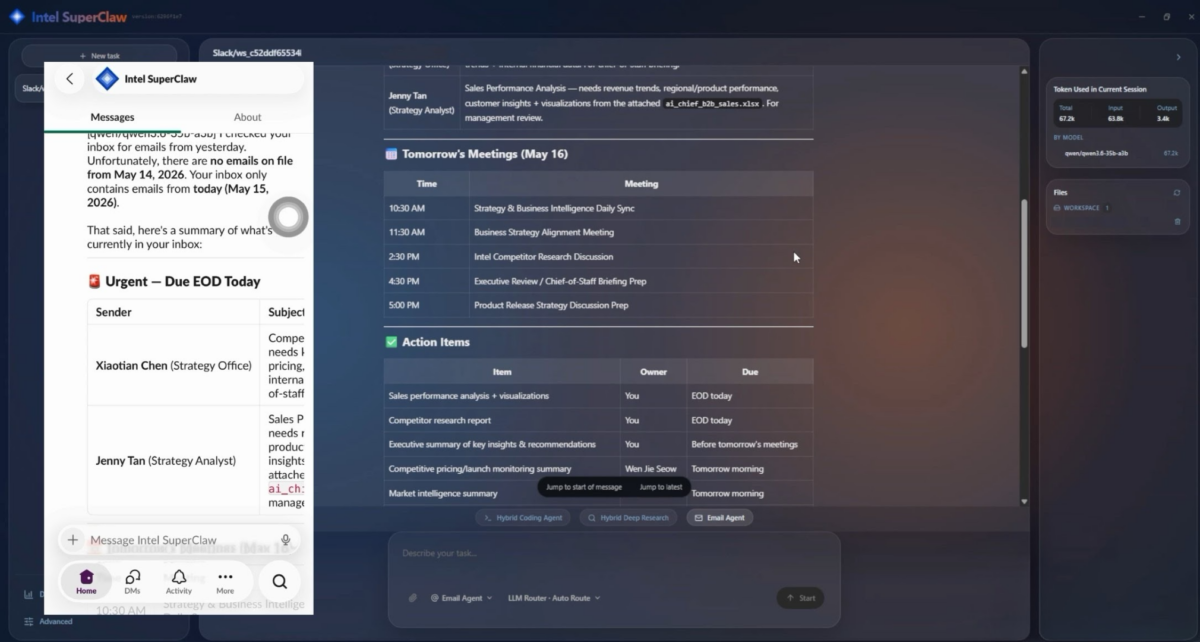
Introducing SuperClaw - a Hybrid Agentic AI Solution Designed for AI PCs, Agent Computers, and Edge Devices
Enterprises are racing past basic AI chat into a new frontier of autonomous, agent-driven workflows—but the true cost of that leap is only now coming into focus. Unlike simple prompts, agentic systems rely on multi-step reasoning, iterative tool use, document parsing, and continuous data retrieval, driving a sharp surge in compute consumption and complexity.
At the same time, these systems are only as valuable as the data they can access. Organizations want agents that can securely analyze internal files, proprietary code, and sensitive business data—but doing so often means relying on cloud-based AI infrastructure that introduces significant privacy and control risks.
The enterprise dilemma is clear: organizations want to leverage rapidly evolving agentic AI solutions but lack access to tools that can effectively address data privacy and compute cost concerns without imposing severe limitations on deployment scale.
Introducing SuperClaw - a Hybrid Agentic AI Solution Designed for AI PCs, Agent Computers, and Edge Devices:
Built by Intel’s AI Super Builder team, SuperClaw gives enterprises a practical path to scale intelligent agents without accepting the usual tradeoffs between performance, cost and data security.
SuperClaw’s hybrid design prioritizes local execution for sensitive and high-frequency tasks such as file access, data processing, and content generation, while reserving cloud models for advanced reasoning and external data retrieval. The result is a more efficient division of labor that reduces token consumption, minimizes latency, and keeps sensitive data where it belongs.
Built on the latest Intel client platforms —including Intel® Core™ Ultra Series 3 processors and Intel® Arc™ Pro B-series GPUs – SuperClaw enables enterprises to run agentic AI workflows at scale on-device, while keeping their compute token costs manageable and protecting sensitive data.
Reducing Cloud Compute Token Costs for Enterprises
When testing SuperClaw versus cloud-only agentic AI solutions, SuperClaw demonstrated up to 70% reduction in average cloud compute token consumption running relevant enterprise workloads1. SuperClaw accomplishes this compute cost-savings through intelligent task routing, context compression, reusable memory, and the aforementioned local-first execution:

With SuperClaw, enterprises can better manage their cloud compute costs for their agentic AI deployments – a critical benefit as cloud compute costs continue to rise and relevant future unit costs become difficult to project accurately.
Helping Protect Sensitive Enterprise Data
SuperClaw keeps sensitive data on-device or within the enterprise edge by default. Before any task is escalated to the cloud, SuperClaw enforces privacy-aware routing and data minimization — helping ensure only necessary, policy-approved context ever leaves the environment. In our enterprise-relevant workloads SuperClaw demonstrated its data protection capabilities by detecting personal identifying information (PII) with 99% accuracyfor industry standard AI privacy benchmarks2.
Intel is planning to include support for enterprise-defined privacy policies in future SuperClaw releases, enabling organizations to tailor data controls to their specific requirements. This will make SuperClaw especially valuable for highly-regulated industries—including finance, healthcare, legal services, manufacturing, life sciences, and public sector— where strict data protection and compliance are non-negotiable.
Aiming to Deliver Agentic AI Solution Close to Cloud-only Services
SuperClaw can deliver better data protection and reduce cloud-compute costs, but one question matters most for enterprise adoption “can SuperClaw provide reasonable performance close to cloud-only agentic AI?”
In practice, it provides that level of performance in workloads that are common for enterprise users. Depending on hardware capabilities, SuperClaw provides different tiered solutions for Intel Core/Core Ultra Series 3 and Intel Arc Pro B-series platforms. The more capable the platform is, the better overall experience is including speed, token cost and accuracy. SuperClaw’s hybrid compute approach intelligently routes each step of the workflow to the most relevant execution layer – whether local or cloud - ensuring the right compute handles the right task with data security protected
Looking at the test data below, you can see how well SuperClaw performed across a range of enterprise-relevant agentic AI tasks with its hybrid compute approach3:
SuperClaw hybrid routing accuracy result against benchmarks from LLMrouterbench and SWEbench
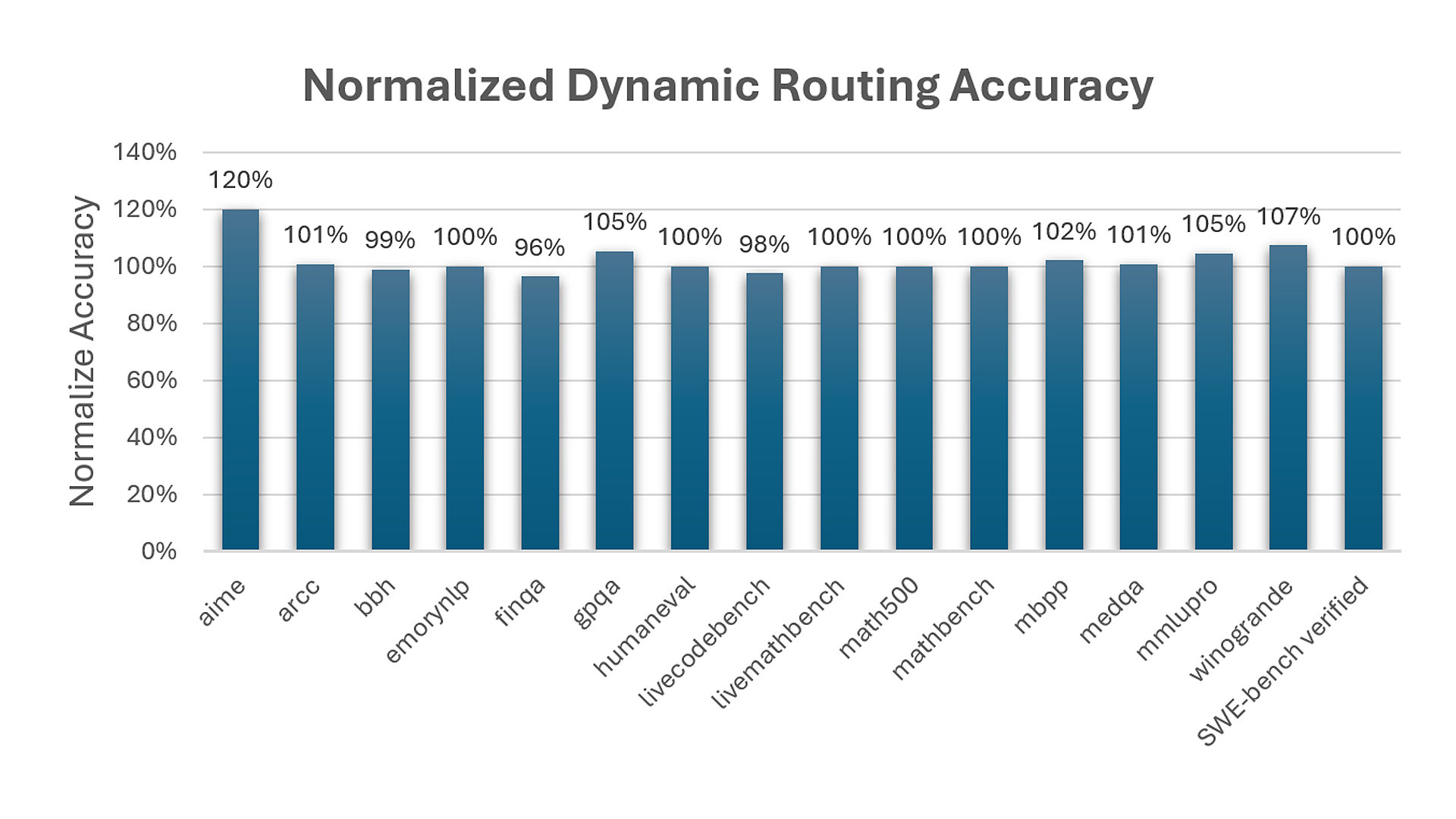
In this test, SuperClaw matched or exceeded task accuracy compared to cloud-only configuration across the board. While total benchmark processing time will be longer with SuperClaw’s dynamic routing approach, the difference is offset by SuperClaw’s overall cost and accuracy benefits.
And for enterprises that depend on sensitive data protection in their agentic AI workflows, the test results below showcase the unique capabilities of SuperClaw compared to similar cloud-only services:
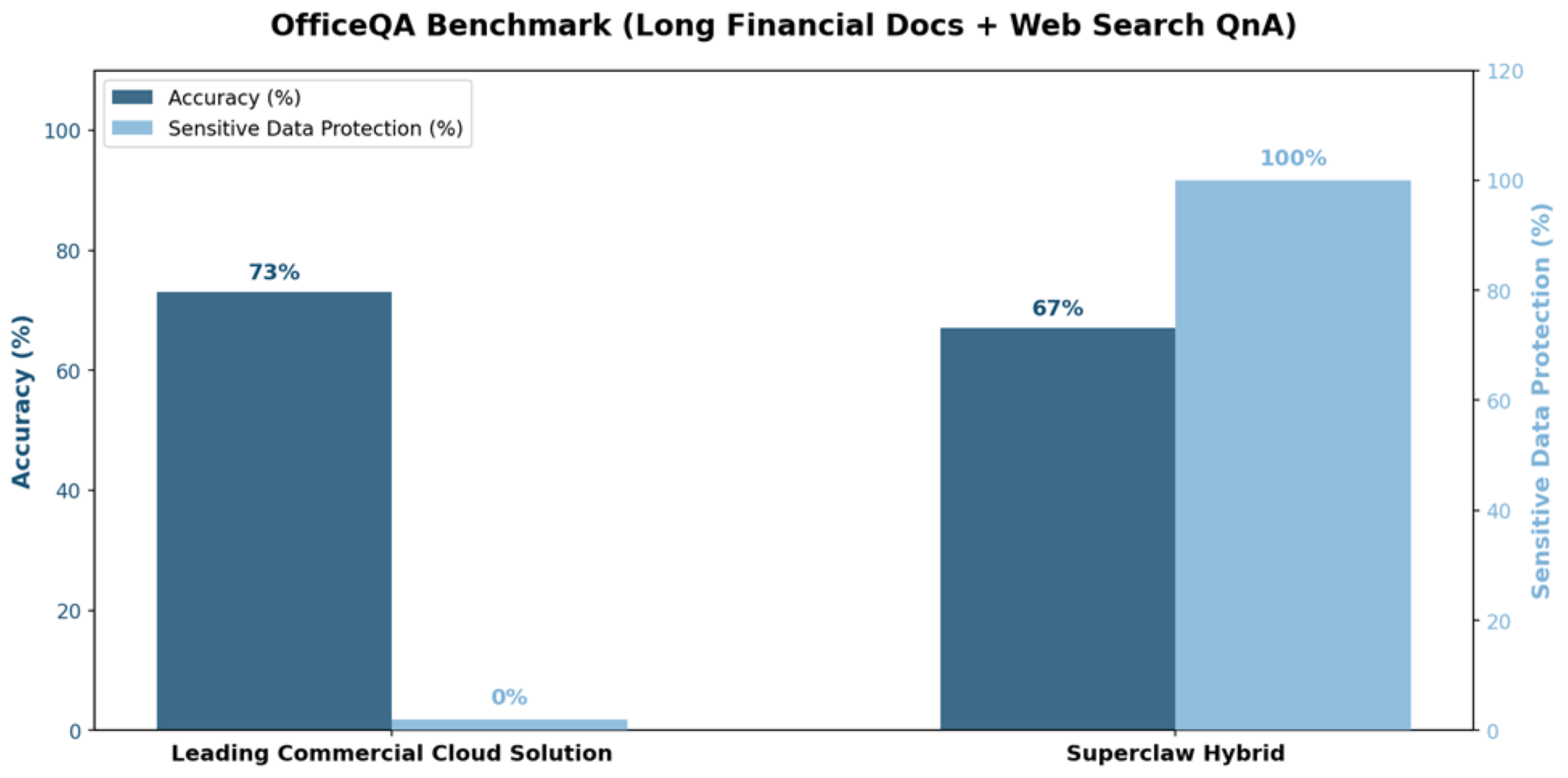
SuperClaw hybrid deep research result against benchmark from OfficeQA
The OfficeQA testing demonstrated the various agent ability to both accurately identify and mask sensitive financial data to ensure no privacy leaking to cloud. SuperClaw achieved more than 92% of the accuracy of the cloud-only agents in this testing, but with the ability to mask and protect the sensitive data on its own4.
This is a critical point going back to the PII test results discussed earlier: current cloud-only commercial agents provide ZERO sensitive data protection capabilities on their own and require a private cloud and/or other enterprise-grade protection protocols to ensure data is sufficiently protected!
Superclaw, on the other hand, gives enterprise customers the ability to customize their agentic AI deployment based on their data protection needs. And it does so while still giving enterprise users the ability to complete complex tasks such as document parsing, report writing, data extraction, content generation, and cross-application workflows with confidence.
Looking Ahead with SuperClaw
SuperClaw is designed to scale across a broad range of Intel hardware platforms, including the recently launched Intel Core & Core Ultra Series 3 processors, as well as edge server systems powered by our Intel Arc Pro B-series GPUs.
This broad platform coverage enables partners and enterprise customers to deploy SuperClaw across different performance, cost, and form-factor requirements while maintaining a consistent hybrid agentic AI software experience.
In the second half of June the SuperClaw beta will be available for download. Stay tuned for more details as we get closer to beta availability.
SuperClaw is already attracting interest from a broad set of customers, and attendees at Computex 2026 will get to see SuperClaw demoes running at Intel customer booths onsite.
Intel’s vision for SuperClaw is to evolve it from a hybrid agent platform into a full agentic OS— making AI agents more useful, personalized, and trusted while maintaining enterprise control at the core. Strong partner momentum underscores Superclaw’s differentiated value across cost, performance, and data protection for enterprise-scale agentic AI.
Additional Reading:
- Intel AI Assistant Builder Home Page: Intel® AI Super Builder
- Intel AI Assistant Builder GitHub: Intel AI Super Builder
Small Print:
Performance varies by use, configuration and other factors. Learn more at www.intel.com/PerformanceIndex.
AI features may require software purchase, subscription or enablement by a software or platform provider, or may have specific configuration or compatibility requirements. Data latency, cost, and privacy advantages refer to non-cloud-based AI apps. Learn more at intel.com/AIPC.
SuperClaw is built based on the OpenCode framework, with additional hybrid AI capabilities, privacy controls, local context management, model routing, governance, and platform optimization developed by Intel.
1Token consumption benchmark testing based on combination of table indexing and query tools/skills workloads. Cloud LLM based on GLM-5 model available on OpenRouter: https://openrouter.ai/z-ai/glm-5. Local LLM based on quantized Qwen 3.6-35B-A3B model - https://huggingface.co/unsloth/Qwen3.6-35B-A3B-GGUF/blob/main/Qwen3.6-35B-A3B-UD-Q4_K_XL.gguf – served with llama.cpp with “thinking mode” set to “off” on the Intel Core Ultra Series 3 processor. Testing was conducted on Intel Core Ultra X7 358H system with Intel Arc B390 built-in GPU and 64GB of memory running on Microsoft Windows 11 Pro. Results as of May 9, 2026.
2PII detection accuracy benchmark testing based on 20-category open-pii-masking-500K-ai4privacy dataset: https://huggingface.co/datasets/ai4privacy/open-pii-masking-500k-ai4privacy/viewer. Testing was conducted on an Intel Core Ultra X7 358H system with Intel Arc B390 built-in GPU and 64GB of memory running on Microsoft Windows 11 Pro. Results as of May 8, 2026.
The PII detection accuracy testing yielded an F1 score of 95%. An F1 score is a metric combining both precision and recall performance into one score – on a scale of 1-100 – with a higher score indicating better performance.
3Hybrid routing accuracy benchmark involves testing on 16 datasets, including SWE-bench Verified and the following datasets from the LLMRouterBench benchmark: AIME (2024), MATH-500, MathBench, LiveMathBench, HumanEval, MBPP, LiveCodeBench, BBH (BIG-Bench Hard), MMLU-Pro, GPQA, FinQA, MedQA, ARC-C, Winogrande, and EmoR-NLP. Testing was conducted on an Intel Core Ultra X9 388H system with Intel Arc B390 built-in GPU and 64GB of memory running Microsoft Windows 11 Pro. Results as of May 8, 2026.
4OfficeQA benchmark testing based on random sampling of 30 questions – 15 each from the “Hard” and “Easy” categories – pulled from the OfficeQA dataset: https://github.com/databricks/officeqa. Questions pertained to “Treasury Bulletins” published after 1983 that do not include visual figures and/or charts. Testing was conducted on an Intel Core Ultra X7 358H system with Intel Arc B390 built-in GPU and 64GB of memory running on Microsoft Windows 11 Pro. Results as of May 8, 2026.
Perplexity Computer test results based on “Perplexity Max” subscription, running OfficeQA benchmark within web-based Perplexity Computer UI on “Default” settings. Results as of April 17, 2026.
Claude Cowork test results based on “Max” subscription, running OfficeQA benchmark in the Claude Cowork Windows application with Sonnet 4.6. Results as of March 17, 2026.
Related Posts
 Artificial Intelligence
Intel and Google Cloud Announce Collaboration to Accelerate Intel’s AI-Enabled Enterprise Transformation
Collaboration leverages Gemini Enterprise and Google Cloud to expand Intel’s AI workforce capabilities via scalable agentic workflows across core business functions
July 16, 2026
Intel Foundry
Intel Invests €5 Billion to Expand Manufacturing in Europe
Investment is expected to create permanent high-tech jobs and engage specialised tradespeople, while expanding leading-edge manufacturing capacity in Ireland.
July 13, 2026