
New Smart City Pilot Network to Bridge Digital Divide for 50 U.S. Cities
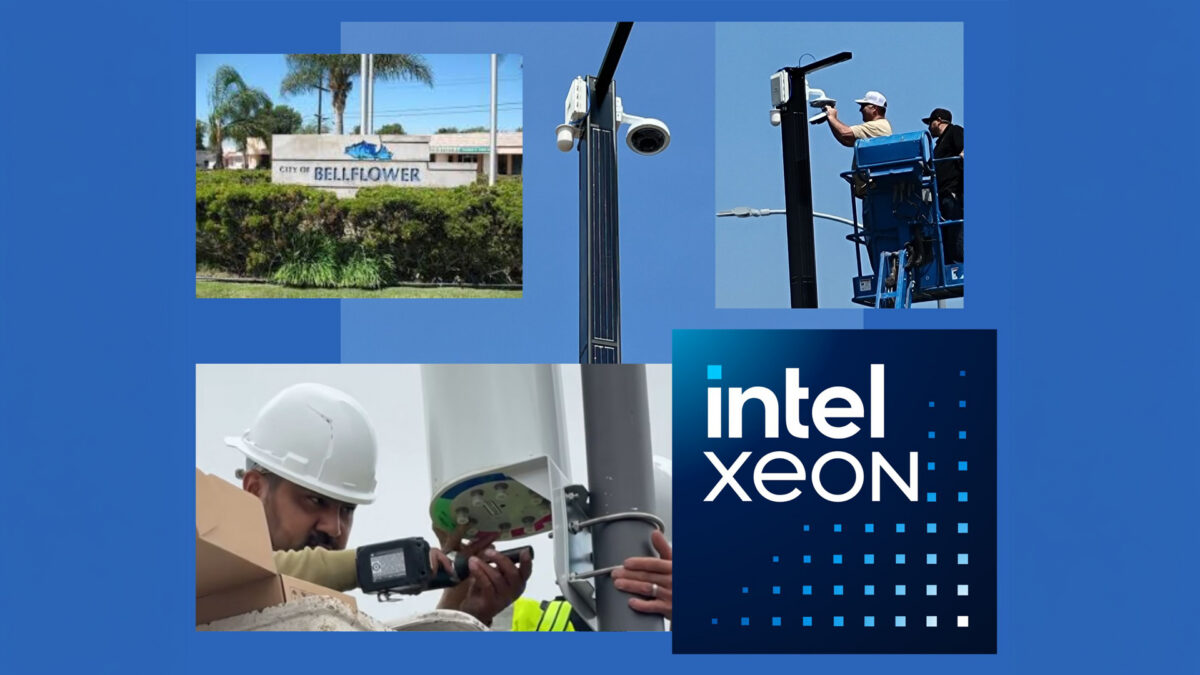
Powered by Intel edge infrastructure, a local California network demonstrates how micro-servers can deliver high-speed connectivity at a low cost.
BELLFLOWER, Calif. — A young woman unwillingly must leave her disabled mother at home to walk to the local library just to use the public internet to pay the household bills. A few blocks away, a family rations its online time, relying entirely on a son’s cellular data plan to check critical medical updates because traditional broadband is too expensive. At the weekly outdoor farmers market, small business owners regularly turn away customers because weak cellular signals prevent them from accepting credit cards.
These are the everyday realities in Bellflower; a suburb of 75,000 people located just 25 minutes outside of Los Angeles. Despite its proximity to America’s second-largest city, the community has long suffered from persistent cellular blind spots and high telecom costs that have left vulnerable residents behind.
Now, a new municipal network called Bellflower Connect is aiming to bridge this digital divide. By using a private wireless network of solar-powered micro-servers with Intel® Xeon® processors inside, and AI-driven cybersecurity at the edge, the public-private partnership offers an affordable, low-power blueprint for community broadband that organizers plan to scale to 50 additional U.S. cities under 150,000 people over the next few years.
Cutting the Red Tape
To get the network off the ground, the city of Bellflower waived standard permit charges, allowed reception towers to be built on public buildings, and bypassed lengthy request-for-proposal processes. This allowed project partner Tradewinds Networks to enter into a long-term revenue-sharing contract with the city. The funding was split through a public-private agreement, using a $1 million municipal transportation grant alongside $2 million put up by Tradewinds.
The program also includes a workforce development element, training local students to become certified wireless broadband technicians. Having won the 2025 Mobile Breakthrough Award for Social Impact, Tradewinds Networks aligned the Bellflower Connect project to meet sustainable goals, taking into consideration city health, economic development, innovation, and sustainability.
"This model allows us to aggregate services and delivery while making the network self-sustaining," said Keith Alexis, chief technology officer and founder of Tradewinds Networks. "We then share revenues back with the community, which enables us to keep up a sustainable ecosystem that drives loyalty and usership. Additionally, our AI-based GuardTower solution runs on Xeon to keep the system secure."
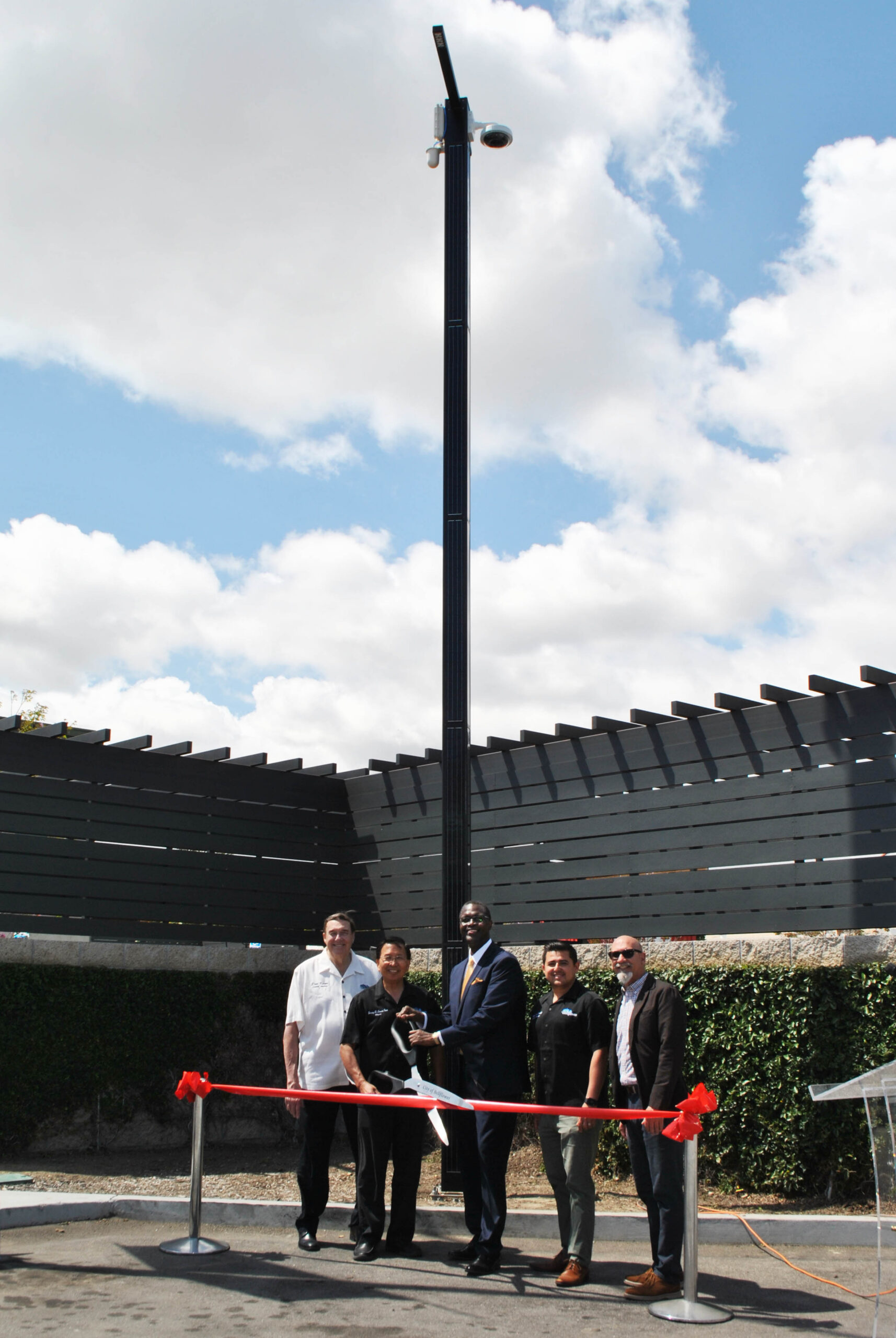
In May 2026, Bellflower, California city officials along with Tradewinds Networks chief technology officer and founder Keith Alexis, center, held a ribbon cutting ceremony officially opening the Bellflower Connect smart city network. One of the newly constructed Intel-based micro-server towers is behind them. (Credit: Tradewinds Networks)
Bringing Power to the Edge
The secret to keeping user costs so low lies in how the data is handled. Traditional wireless networks rely on sending data back and forth to distant, massive cloud data centers packed with expensive, power-hungry graphics processors. That data journey requires heavy infrastructure and immense electricity, costs that big telecom companies pass on to consumers.
Bellflower Connect skips the cloud entirely. Instead, the network uses a fleet of 80 slim solar towers and repeaters placed around town. Each tower backhauls to central locations that feature compact Dell PowerEdge XR8000 series servers running a 4th Generation Intel Xeon processor. This allows data to be processed right there in the city, and in some cases, on the street corner, a concept known as edge computing.
Because Xeon processors are highly scalable and versatile, they "snap" into these lightweight towers easily, operating at a fraction of the cost, power, and space required by a standard cloud setup.
"By having off-the-shelf Intel Xeon system-on- chip processors directly in the towers, street corner or city facilities versus sending information through the cloud, the system is scalable, modular, and information is processed faster, at a lower cost, and using less power,"
-Vijay Kesavan, a principal engineer for Intel’s Network and Edge Group.
This local computing footprint also creates a digital foundation for future municipal upgrades. According to Kesavan, cities can easily snap new services right into the existing Xeon infrastructure, such as smart street lighting, air quality or traffic sensors, and water utility leak detection.
High Tech at Low Cost
While connection to the network is entirely optional, the financial impact on residents who have been using it has been immediate. Qualifying low-income households receive free internet access through a home modem that links wirelessly to the nearest neighborhood tower. Other residents can opt-in for $15 per month, while local businesses can access the network for $39 per month. Alexis notes that’s far below traditional commercial carriers.
As of May 2026, about 60 households are using the service during its early rollout phase. By the time construction finishes in mid-2027, organizers expect 10,000 households connected to the network. Free public Wi-Fi will also blanket local parks, libraries, and the city's outdoor markets.
Local business owners are already preparing for the transition. Joe Ung, owner of Cassidy’s Corner Café, is opening a new location in Bellflower that will use the network for his operations and customer Wi-Fi.
"Having easy, affordable, accessible internet is a win-win for everyone," Ung told KTLA-TV in an interview about the new network in May. "A lot of times people don’t see the everyday expenses of running a small business. Anywhere you can save, it’s a huge benefit."
Scaling the Blueprint
The expansion beyond California is already underway. Wrightsville, Arkansas, is scheduled to begin Phase 1 of its network installation this summer, with eight additional U.S. cities currently navigating the design review and approval pipeline.
Though the yearlong rollout has faced logistical hurdles, project leaders say the community response validates the effort.
"We’ve had many difficulties assembling the model for this network, from rising costs to delayed fiber delivery," Alexis said. "But residents have testified about the value they’ve gotten from it in city hall meetings. When installers meet residents who tell them how this is changing their lives, it makes it worth finding solutions to this complex problem."
Related Posts
 5G & Wireless
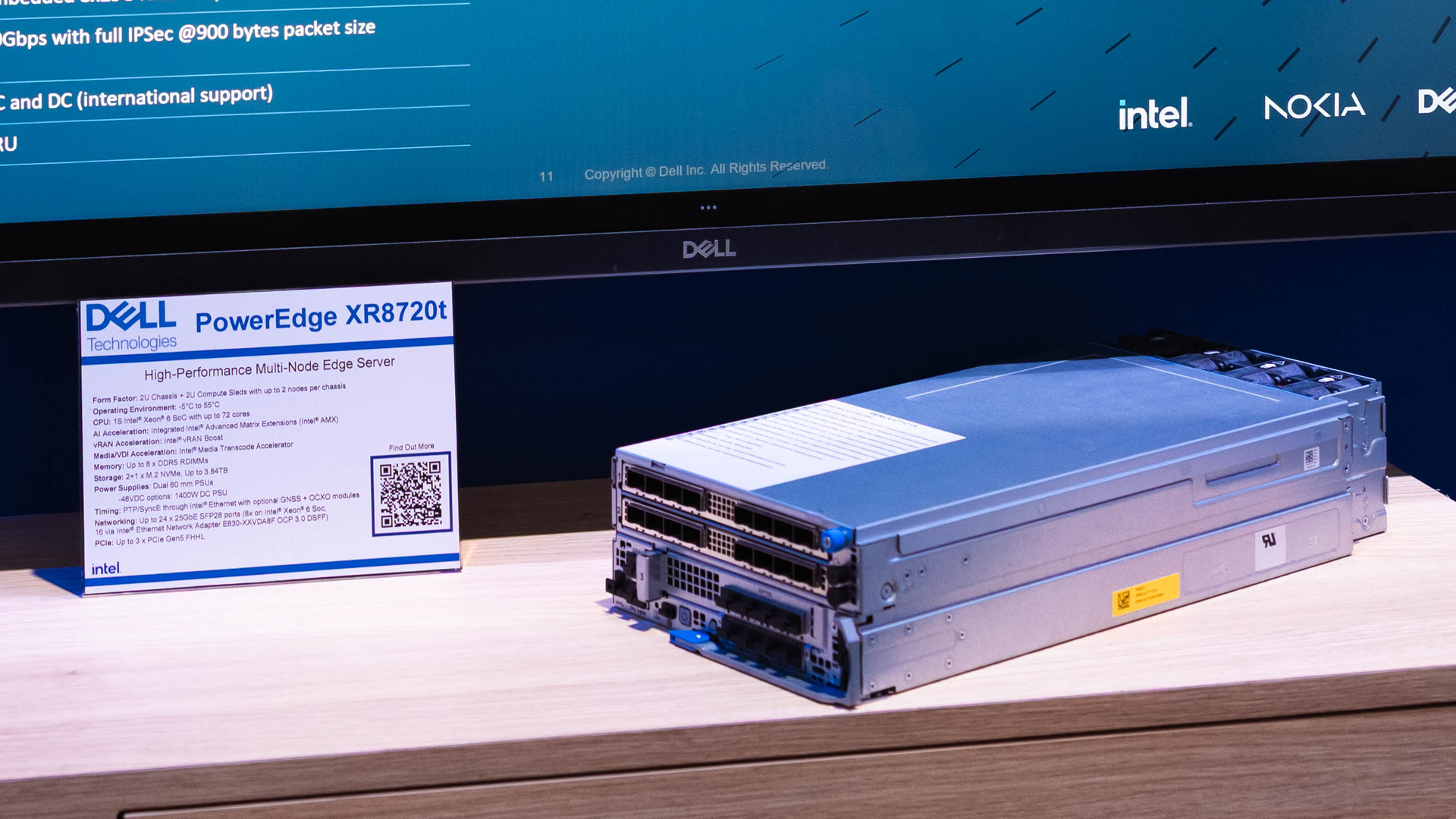
Intel, Dell Technologies and Nokia Redefine UPF Deployment at the Far Edge
Dell PowerEdge XR8000 with Intel® Xeon™ 6 SoC delivers high-performance UPF compute to rugged, space‑ and power‑constrained 5G edge environments.
April 13, 2026
5G & Wireless

Postcard from MWC 2026: A Solid 5G Foundation Today Paves the Path to Seamless 6G Tomorrow
Intel and Partners Preview a 6G Future That’s AI-ready, More Secure & Highly Efficient
March 3, 2026